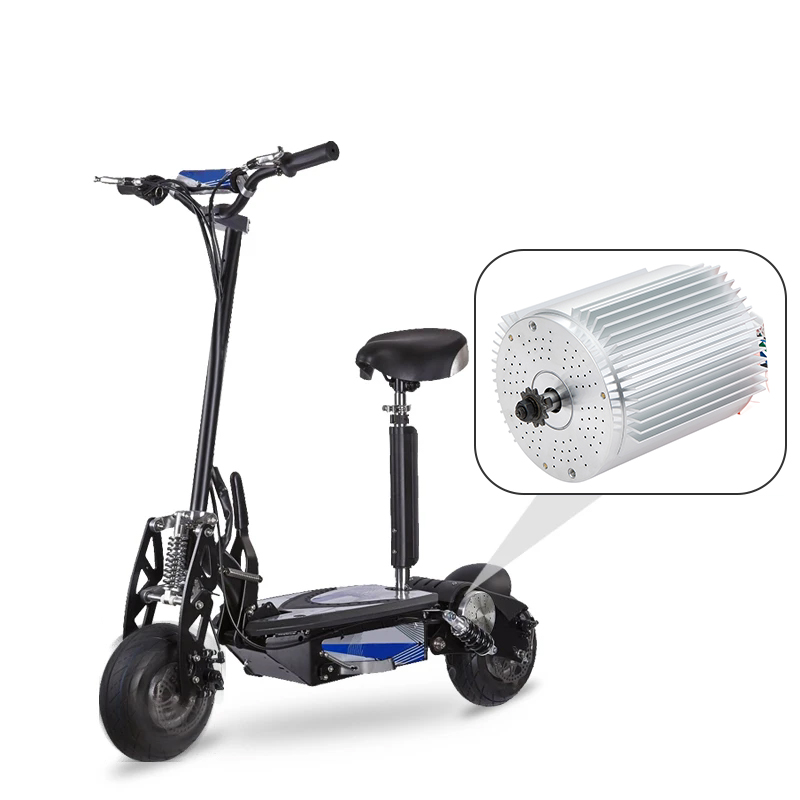
There's a frustrating pattern in the DIY electric vehicle world. You spend weeks sourcing parts, wiring up your build, and tuning your controller — then three months later your motor fails quietly, with no warning and no trace of what went wrong. Overheating is the silent killer of more DIY builds than any other single cause.
The Kunray MY1020 is built around a simple premise: if a motor is going to run hard, it should be self-aware enough to report what's happening inside. It's not the most powerful motor in its size class. It's not the cheapest. But it's one of the few mid-range high-power motors with a factory-integrated temperature sensor — and that changes how you build, tune, and run your vehicle.
Here's a full breakdown of what the MY1020 actually is, where it excels, and what to watch for.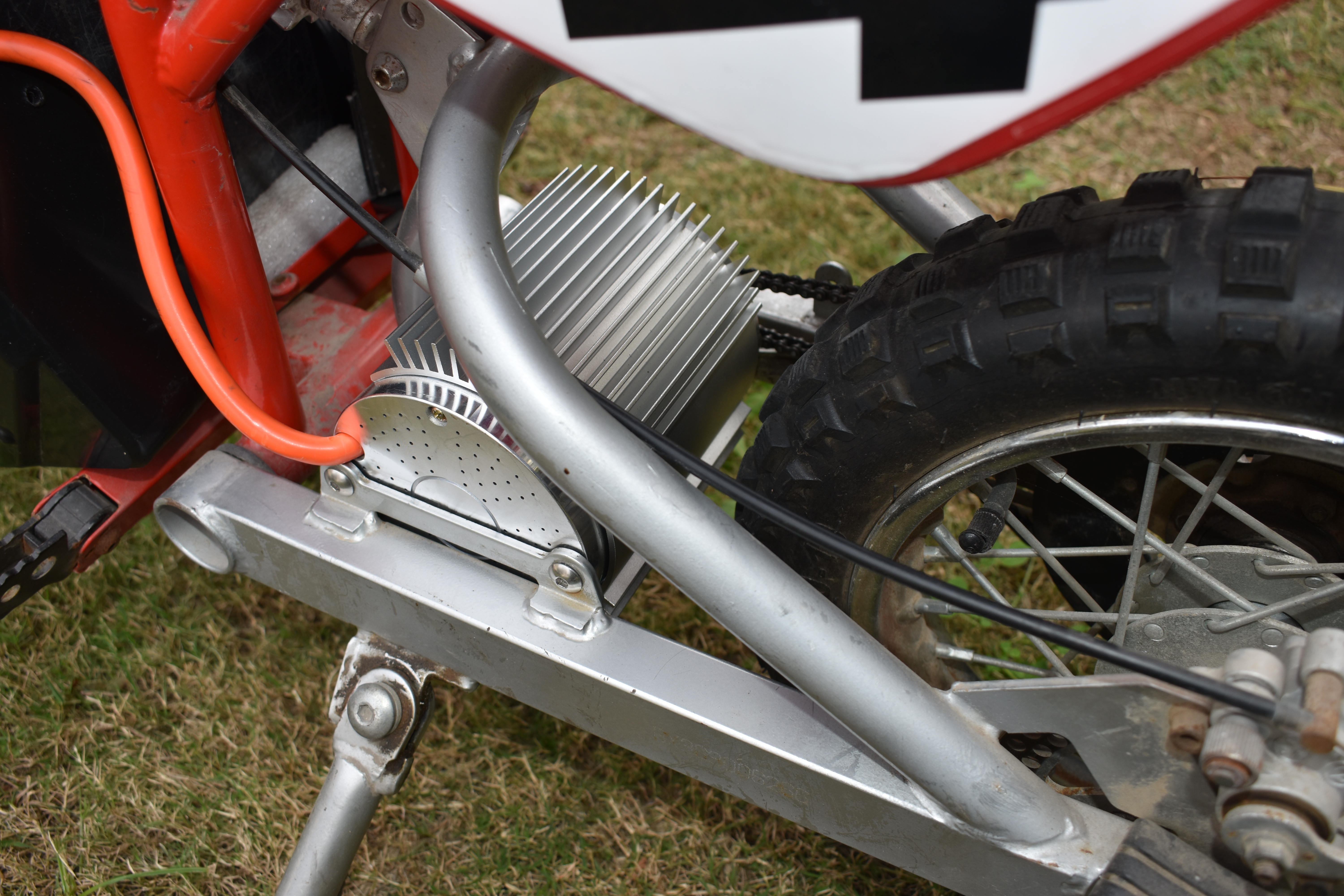
The MY1020 is a brushless DC (BLDC) high-speed mid-drive motor manufactured by Kunray, a Chinese EV component specialist. It's designed to be chain-driven (T8F or 25H sprocket interface), making it a natural fit for:
It comes in two primary voltage/power configurations:
The 48V variant prioritizes torque — at 6.9 N·m it pulls harder from a stop, making it the better choice for heavy riders or steep grades at lower speeds. The 72V/3000W version trades some low-end grunt for higher top speed and sustained power output at speed.
This is the detail that actually separates the MY1020 from most competitors in its price bracket.
Inside the motor, Kunray has integrated a KTY84-130 silicon temperature sensor — a component from NXP (formerly Philips Semiconductors) rated to operate up to 300°C and specifically designed for high-temperature winding monitoring applications. It has a positive temperature coefficient of resistance (PTC), meaning its resistance rises predictably with temperature.
At 25°C the sensor reads around 603 Ω. At 100°C it reads around 1000 Ω. At the typical protection threshold of 105°C it reads around 1030 Ω.
Why does this matter? Because the FarDriver NS12 controller (included in kit configurations) reads this resistance in real time. When it crosses the threshold you've set in the APP, the controller reduces phase current or cuts output — automatically, before damage occurs.
Without a temperature sensor, you get two bad outcomes:
With the KTY84-130 in place and the FarDriver APP open, you can literally watch your winding temperature during a ride. That turns motor tuning from guesswork into engineering.
The MY1020 kit ships with the FarDriver NS12 — a Kunray-exclusive sinusoidal FOC (Field-Oriented Control) controller. A few things worth knowing:
It's pre-matched at the factory. When you buy a motor + controller kit, Kunray sets the hall phase angles, pole pair count, temperature thresholds, and current limits before the box ships. Plug in, connect the throttle, and ride. No self-learning sequence required.
It has built-in Bluetooth. Pull out your phone, open the FarDriver APP (iOS or Android), and you're looking at real-time data: speed, phase current, winding temperature, throttle response curves. You can adjust parameters — current limits, flux weakening strength, throttle sensitivity, motor direction — without touching a wire.
It runs sinusoidal FOC. This is the premium drive mode: quieter than square-wave controllers, smoother torque delivery especially at low speeds, and meaningfully more efficient under load. For a mid-drive build where you care about range and noise, the difference is noticeable.
Key NS12 specs at a glance:
The IP67 rating is worth emphasizing — for e-bike and off-road builds where water exposure is a real concern, this matters significantly.
The T8F chain interface is essentially made for kart applications. Builders typically run the 72V/3000W variant with a 11T motor sprocket paired to a larger rear sprocket to tune final drive ratio for the track. With the FarDriver NS12's flux weakening capability, you can push past the motor's base RPM and extract more top speed without swapping hardware. The temperature sensor becomes critical here: sustained lap cycles mean the motor never really cools between runs. Having the controller auto-throttle before hitting damage temperature is a genuinely useful protection.
The MY1020 is one of the most popular drop-in upgrades for the Razor MX-series. The motor dimensions and chain interface align closely with the stock motor position, and there's strong community documentation around the swap. The 48V/2000W version is the more common choice here — it works with 48V battery packs that Razor owners often already have, and 6.9 N·m of torque on a lightweight dirt bike chassis is genuinely fun.
For builds using the 25H chain interface variant, the MY1020 sits comfortably in the mid-drive position on a standard bicycle frame. The sinusoidal FOC controller makes for a smoother, quieter ride than typical square-wave mid-drive options, and the temperature monitoring is especially useful for long-distance loaded riding where sustained power output would push a lesser motor into thermal protection.
In colder climates — Russia, Canada, northern Europe — the 1000W+ segment of electric snowmobile builds has settled on the MY1020 as a go-to option. The combination of high phase current capability, temperature-aware protection, and the ability to run 72V means you can extract serious power while the cold ambient temperature gives the motor extra thermal headroom.
The MY1020 ships with an 11T sprocket as standard, but the correct chain interface depends on your configuration:
The T8F interface is more common in go-kart and high-load applications — the chain is heavier duty and handles sustained torque better. The 25H interface is more typical for e-bike mid-drive conversions where a lighter chain is acceptable.
For final drive ratio calculation: with an 11T motor sprocket, a 44T rear sprocket gives you exactly 4:1 — a common starting point for go-kart builds targeting 40–50 km/h. Adjusting rear sprocket teeth is your primary tuning lever for top speed vs. acceleration.
Current settings and temperature. The NS12 is capable of 260A phase current. Run it at the maximum out of the box on a summer day without good airflow and you'll see your winding temps climb. The sensor and controller will protect the motor — but you'll also notice your power getting cut at exactly the wrong moment. Tune your current limits based on actual temperature data from the APP, not just "max power" assumptions.
Motor direction. If after installation the motor spins the wrong way, don't swap phase wires — open the FarDriver APP, go to Parameters, and toggle Motor Direction between 0 and 1. Save, restart, done. It's safer and reversible.
Chain tension. High-torque mid-drive motors are hard on chains under hard acceleration. Check and adjust chain tension after the first 5–10 hours of riding. A loose chain on a 3000W motor will wear sprocket teeth quickly.
Hall sensor connector. The hall sensor plug carries the temperature sensor signal alongside the hall signals. Ensure it's fully seated and protected from water and vibration — a loose hall connection will cause the motor to run erratically or refuse to start.
For builds that will see sustained high-load cycles — race karts, heavily loaded cargo bikes, or riders in hot climates pushing 72V/3000W regularly — Kunray offers the MY1020-WG, which is the identical motor with a bolt-on aluminum alloy heat sink pre-installed at the factory.
The heat sink roughly triples the motor's passive cooling surface area, keeping steady-state winding temperature meaningfully lower during extended runs. For most casual or moderate-duty builds, it's optional. For high-intensity applications, it's a worthwhile upgrade to buy in from the start rather than add later.
→ See the MY1020-WG with heat sink