The first reaction is often:
“Maybe the motor is not powerful enough.”
In many cases, however, the real problem is not motor power.
It is the way motor power is transferred to the wheel.
For a mid-drive electric vehicle, the relationship between motor torque, motor RPM, gear ratio, wheel diameter, battery, controller, and vehicle load determines how much usable force actually reaches the tire.
This is why a 3000W motor can perform poorly with the wrong drivetrain, while a lower-power motor can perform surprisingly well when the complete system is properly matched.
The Kunray MY1030 is a mid-drive BLDC motor platform designed to work through a mechanical drivetrain. Its different versions provide different combinations of rated power, torque, and speed, while multiple sprocket options give builders flexibility when designing the final drive.
Understanding how these variables interact is the key to getting useful performance from the motor.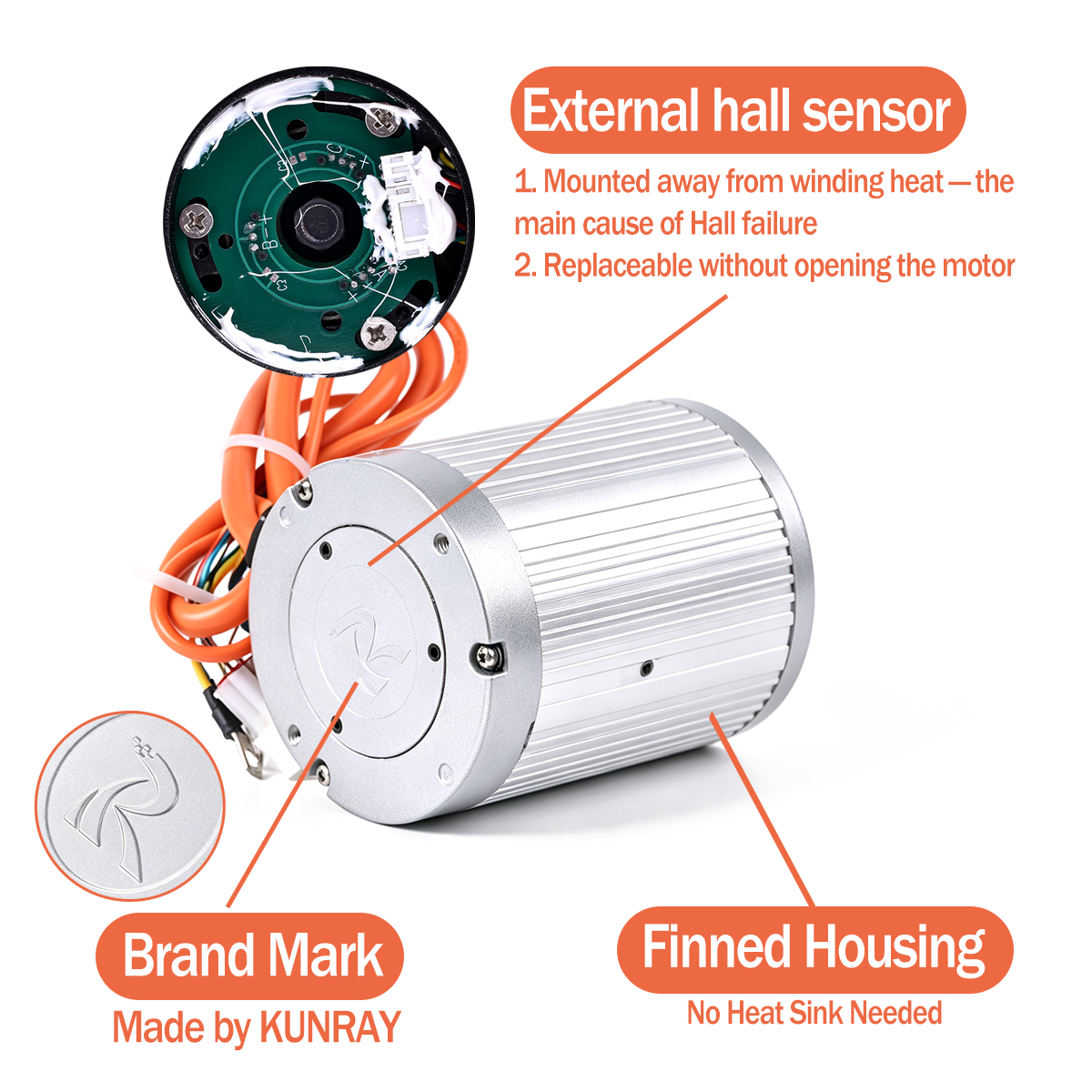
Motor power and wheel force are related, but they are not the same thing.
A motor produces mechanical power through a combination of torque and rotational speed.
A simplified relationship is:
Power ∝ Torque × RPM
This means that a motor can produce substantial power at relatively high RPM without directly producing the amount of torque required at the wheel.
The drivetrain solves this problem.
A mid-drive motor typically rotates much faster than the vehicle wheel. A reduction system then converts the motor's high rotational speed into a lower wheel speed while increasing torque at the driven output.
This is the fundamental reason gearing exists.
Imagine a motor turning at 4000 RPM.
If the total reduction ratio is 4:1, the theoretical output speed becomes:
4000 ÷ 4 = 1000 RPM
If the reduction ratio is increased to 8:1:
4000 ÷ 8 = 500 RPM
The second configuration produces lower output speed but greater mechanical torque multiplication.
This is the trade-off.
The motor has not magically become more powerful.
The gearing simply changes how the motor's available power is converted into speed and torque at the wheel.
Suppose a vehicle uses a high-speed mid-drive motor with a relatively small reduction ratio.
At first glance, the vehicle may appear to have a high-performance motor.
But if the gearing is too "tall" for the vehicle, the motor may struggle to accelerate from low speed.
This becomes particularly noticeable when:
In these situations, the problem may not be that the motor lacks rated power.
The drivetrain may simply not be giving the motor enough mechanical advantage.
Wheel diameter is another variable that is often overlooked.
For the same wheel RPM, a larger wheel travels farther during one revolution.
That means a larger wheel can increase theoretical vehicle speed.
However, it also increases the torque required at the wheel for a given tractive force.
This creates a useful engineering relationship:
Larger wheel → higher potential speed → greater torque requirement
Smaller wheel → lower potential speed → lower torque requirement
Therefore, a motor and gear ratio that work well with a small go-kart wheel may behave very differently when installed on a larger motorcycle-style wheel.
Consider a simplified drivetrain.
The motor operates at:
4000 RPM
The total reduction ratio is:
6:1
The theoretical wheel speed is:
4000 ÷ 6 ≈ 667 RPM
Now imagine increasing the reduction ratio to:
8:1
The wheel speed becomes:
4000 ÷ 8 = 500 RPM
The vehicle will have a stronger mechanical advantage at the wheel, but the maximum theoretical speed will be reduced.
This is why gear ratio should be selected based on the vehicle's actual purpose.
A racing-oriented vehicle may prioritize higher wheel speed.
An off-road vehicle may prioritize wheel torque.
A utility vehicle may need a compromise between the two.
The MY1030 platform supports several official sprocket configurations:
For the #35 chain configuration, for example, both 9T and 11T sprockets are available.
The smaller 9T motor sprocket provides a greater reduction ratio when the driven sprocket remains unchanged.
The 11T sprocket provides a lower reduction ratio under the same conditions.
This gives builders a practical way to change the balance between acceleration and potential speed without changing the motor itself.
It is important not to treat gearing as a magic solution.
If the battery cannot provide sufficient current, increasing the gear reduction will not create additional electrical power.
If the controller limits motor current, the motor may still be unable to produce the desired acceleration.
If the motor is thermally overloaded, a lower gear ratio may actually increase the time spent under heavy load.
The complete system must therefore be considered:
Battery → Controller → Motor → Gear Ratio → Wheel → Vehicle Load
A weakness anywhere in this chain can limit the final result.
Instead of asking:
“Is 3000W enough?”
ask:
“What wheel torque and wheel speed does my vehicle actually need?”
Then work backward.
Consider:
This approach gives a much more realistic picture of what the motor can do.
A mid-drive architecture separates motor speed from wheel speed.
That is one of its biggest advantages.
The motor can operate within its intended RPM range while the drivetrain determines how that speed is converted at the wheel.
For DIY builders, this means the same basic motor platform can potentially be configured for very different vehicles simply by changing the final-drive arrangement.
The MY1030's multiple voltage, power, and sprocket configurations provide additional flexibility for this type of system design.
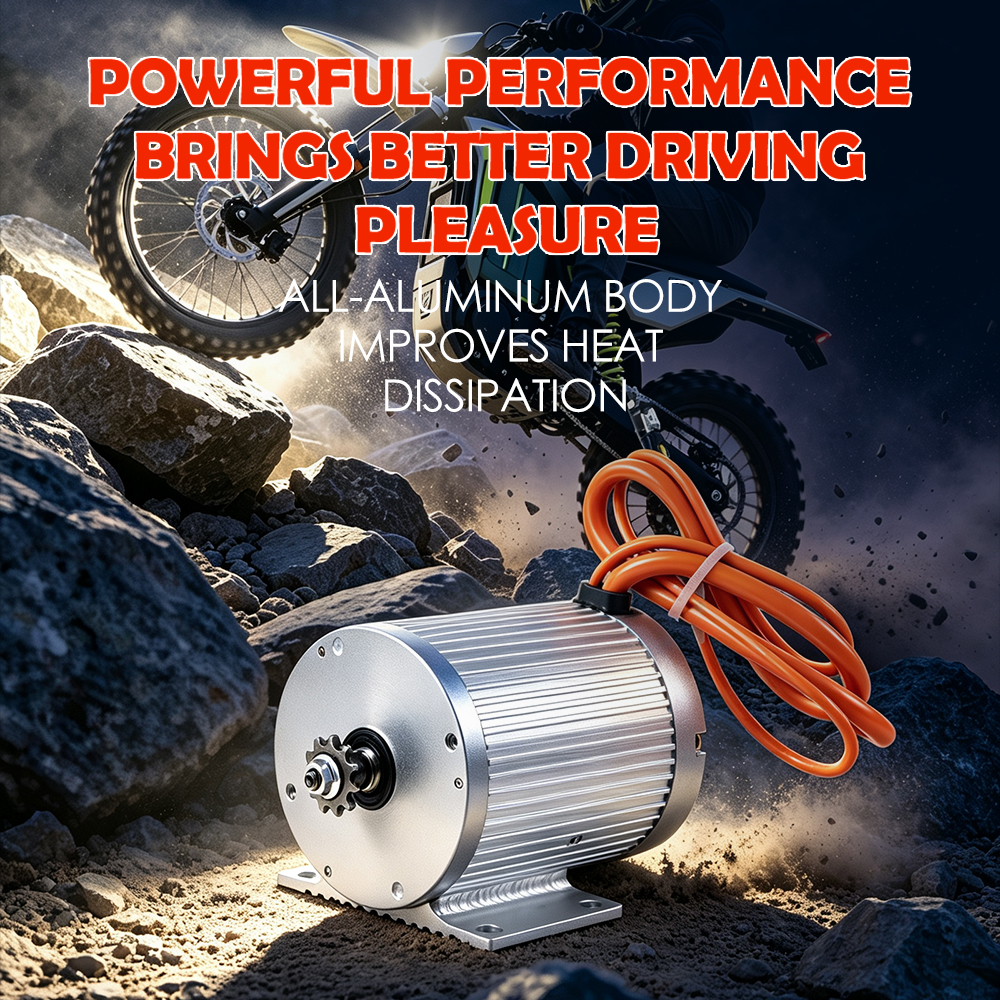
A high-power electric motor does not automatically produce a high-performance vehicle.
Real-world performance depends on how effectively the motor's power is converted into usable force at the wheel.
If a 3000W motor feels weak, don't immediately blame the motor.
Check the entire system:
Motor torque + RPM + Gear Ratio + Wheel Diameter + Battery + Controller + Vehicle Weight
A properly matched drivetrain can make a dramatic difference.
For a mid-drive motor such as the Kunray MY1030, the motor is only the beginning of the design.
The real performance comes from matching the motor to the drivetrain.


