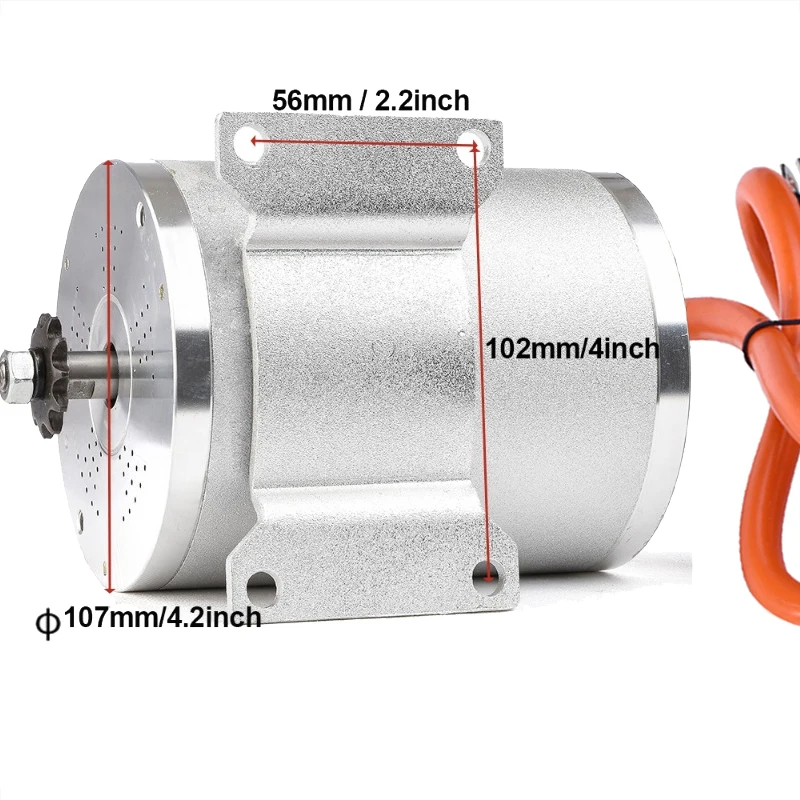
📌Additional Notes
√ When the motor is installed on the left side and requires counterclockwise rotation, the wiring configuration shall be as follows:
PHAGE WIRE:
yellow to yellow
blue to green
green to blue
HALL WIRE:
red - red
black - black
green - green
yellow - blue
blue - yellow
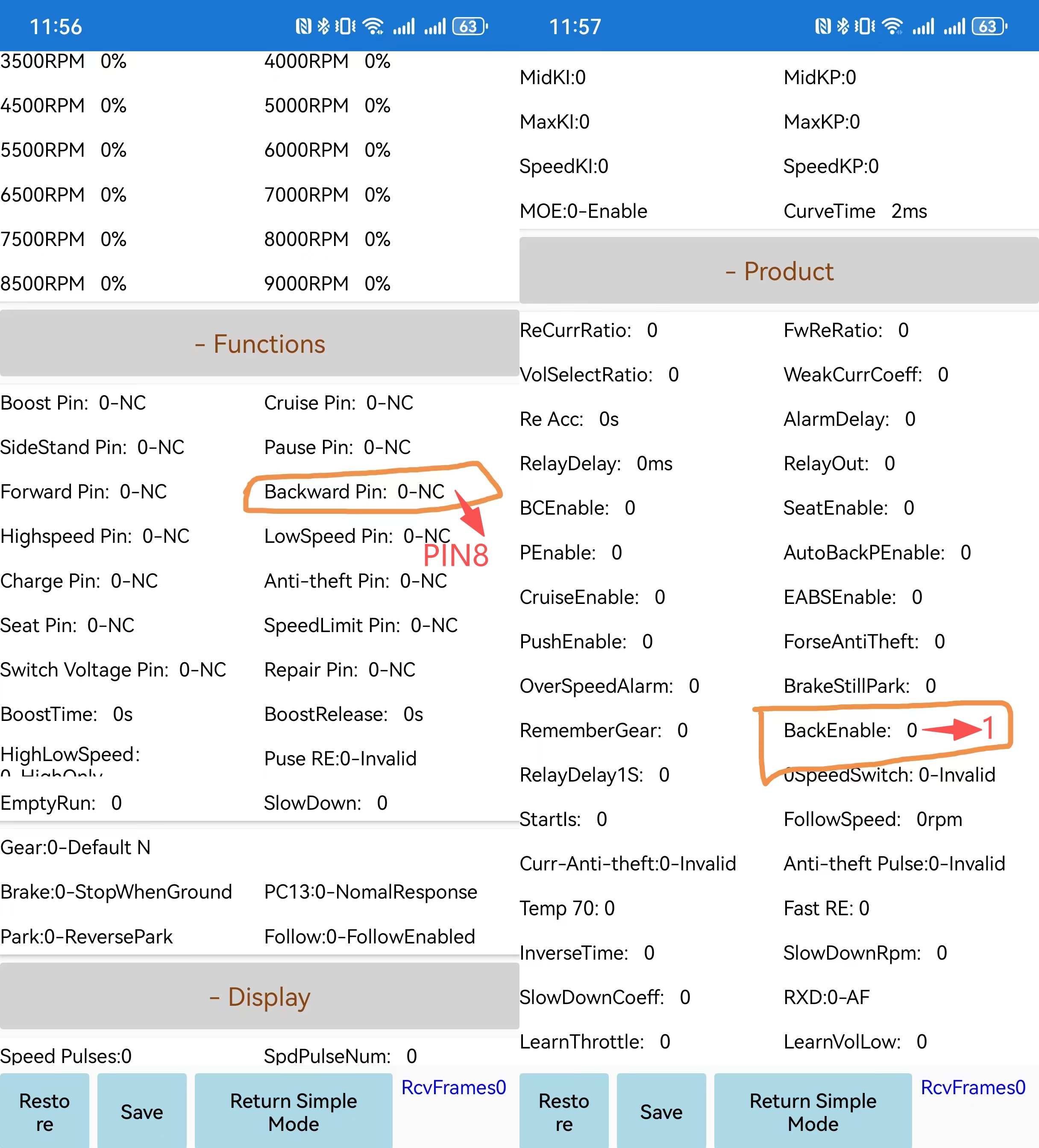
√ If you need to use the reverse function, you must enable it in the FARDRIVER APP.Please set the parameters according to the following image.(Using the Kunray NS12 as an example, the parameters should be set as follows.)
FAQ
Why does this motor support both 48V and 72V configurations?
Supporting both voltages gives you flexibility:
48V delivers balanced speed and efficiency with smoother power delivery.
72V offers higher top speed and greater torque output for performance-oriented builds or heavier load applications.
How does the temperature sensor benefit this motor kit?
The built-in temperature sensor monitors the motor’s heat level during operation. When connected to a compatible controller, it can help reduce output or trigger protection when overheating is detected, extending motor life and improving safety.
Can this motor kit be used for high-speed electric bike or scooter builds?
Yes. When paired with an appropriate controller and battery system, especially at 72V, this motor kit can provide high speed and strong acceleration, making it ideal for performance EV builds.
How fast can my vehicle go with this motor?
The actual top speed varies based on multiple factors such as battery voltage, vehicle weight, wheel diameter, drivetrain configuration, and controller setup. A 72V setup typically enables higher achievable speeds compared to 48V.
Does this motor support reverse operation?
Reverse capability depends on the controller you choose. Many modern brushless motor controllers support bidirectional control, which allows for forward and reverse motion when correctly configured.
What kind of battery should I use with this motor?
Use a 48V or 72V lithium battery pack with sufficient discharge current rating. The battery must match the controller voltage and be capable of delivering consistent power for optimal performance.
How difficult is the installation for a DIY user?
Installation is straightforward for those with basic electrical and mechanical skills. It involves mounting the motor, wiring the controller and battery, attaching the throttle or user interface, and securing all connections. Always follow safety wiring practices.
Why is proper gearing important when using this motor kit?
Proper gearing helps balance top speed, torque, and efficiency. Incorrect gearing can reduce acceleration, lower efficiency, or put excess strain on the motor and controller.
How should I choose the right controller for this motor?
Choose a brushless DC controller that supports the voltage you’re using (48V or 72V) and has adequate current rating for your motor power. Controllers with programmable features like current limiting, thermal protection, and reverse mode enhance overall system performance.
Does this motor require regular maintenance?
Brushless motors require minimal maintenance. You should periodically:
• Check connectors and insulation
• Ensure the temperature sensor wiring is secure
• Keep external areas free of debris and dust
Motor & Controller Pairing
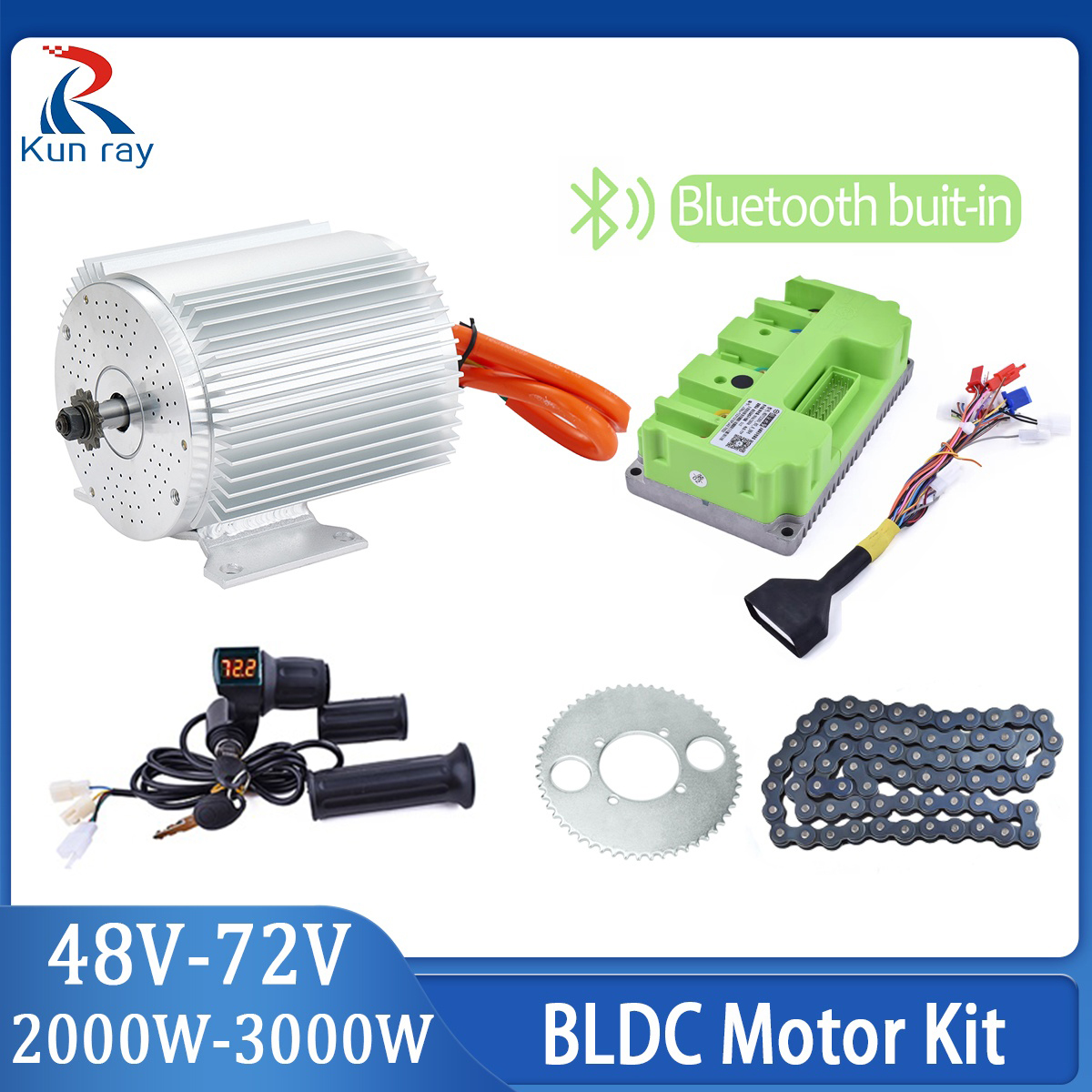
- Matched, not generic. The ND72260 is a sine-wave brushless motor controller chosen for this motor rather than a general-purpose unit, so the controller, throttle and motor are configured as one set before they ship.
- Sine wave, so the throttle feels linear. A sine-wave controller drives the motor with a smooth waveform instead of abrupt switching, which shows up as progressive pickup from a standstill, quieter running and less heat building in the windings.
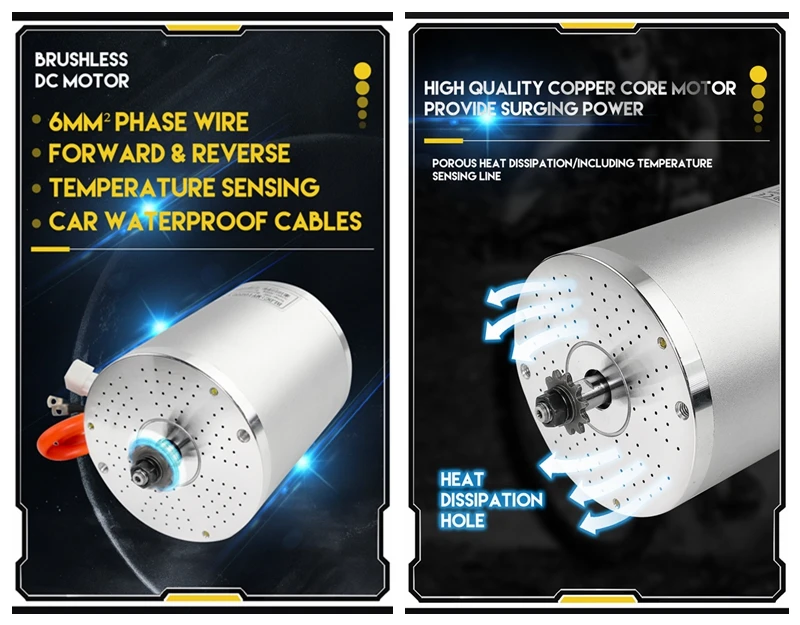
- Built for heat. A brushless DC electric motor makes most of its heat in the copper, so this one uses a pure copper coil inside an aluminium housing with a heat sink. The body also resists oxidation, which matters on machines that live outdoors or get hosed down after a muddy run.
- Current margin. The controller's DC and phase current ratings sit above what the motor draws in normal use, and that margin is what keeps it from cutting out when you ask for full power on a climb or with a heavy rider aboard.
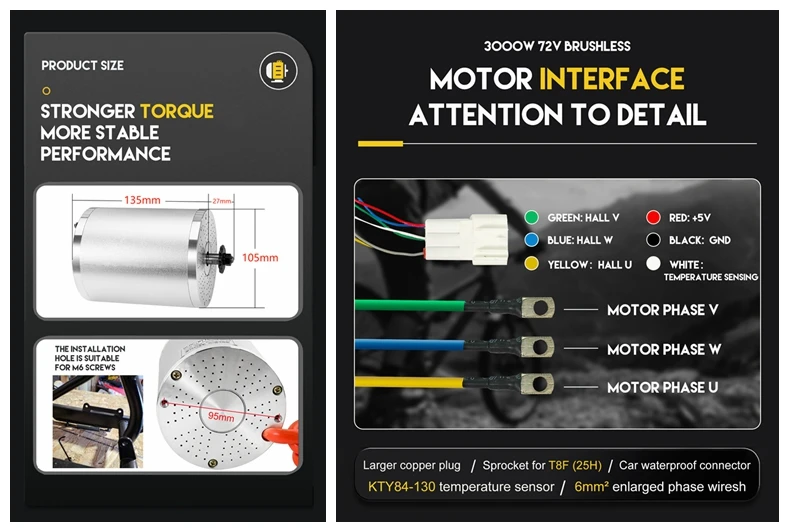
- Overheat protection. A built-in KTY84-130 temperature sensor watches the motor's internal temperature; wired through the controller, it lets the system pull power back when things get hot. Quiet insurance on long climbs, in slow traffic and on two-up scooters.
Specifications
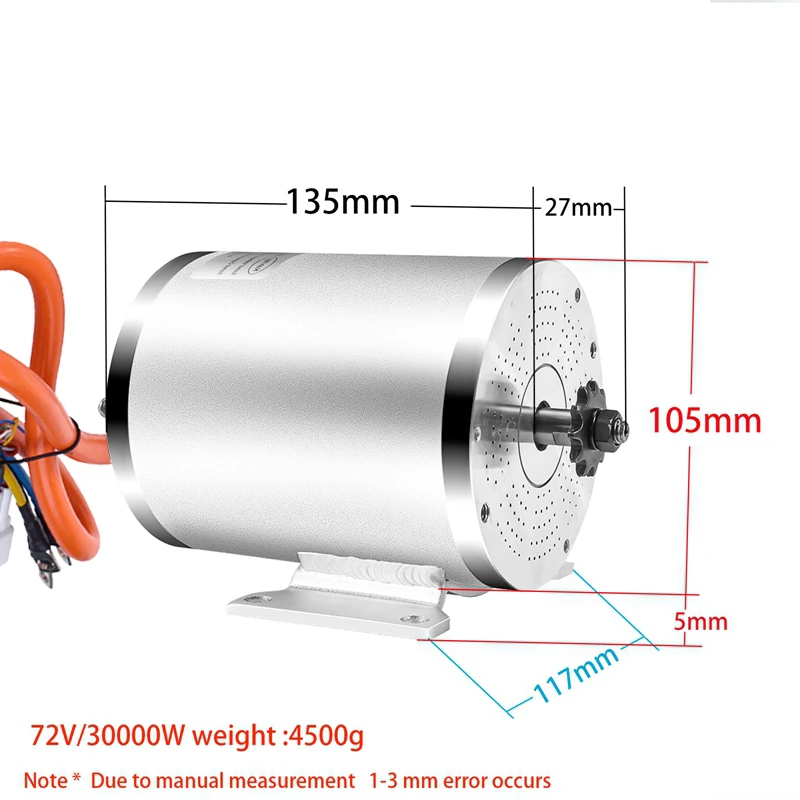
| Figures shown for | 48V 2000W / 72V 3000W |
| Motor series | MY1020-WG |
| Rated voltage | 48V DC / 72V DC |
| Rated speed | 4300 rpm / 4900 rpm |
| Drive output | 11-tooth sprocket, T8F chain |
| Bracket option | Motor with bracket or motor without bracket |
| Supplied controller | ND72260 sine wave, 88V peak, 80A DC, 260A phase |
Typical Applications
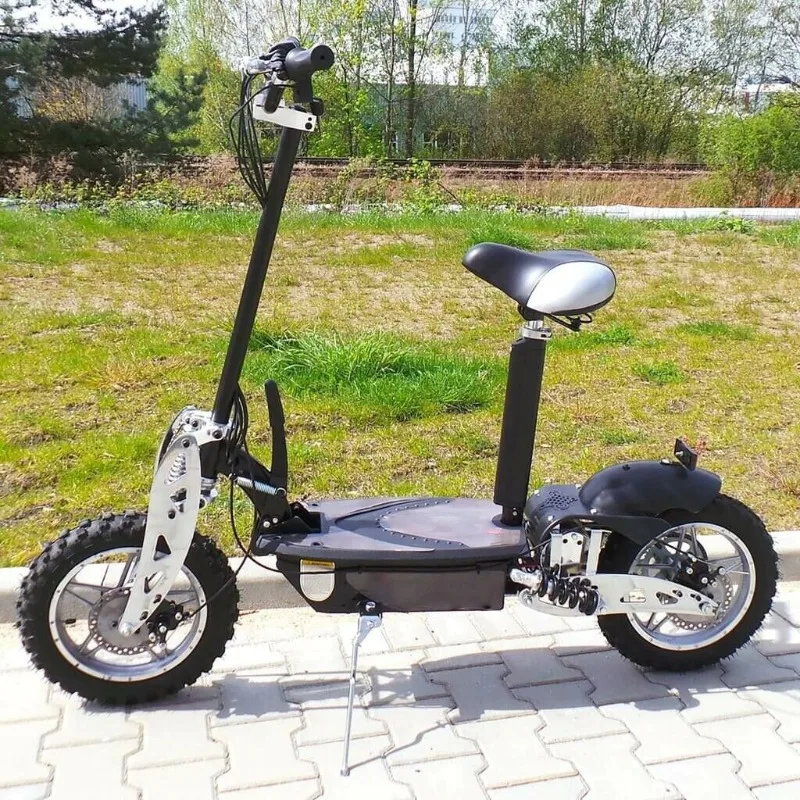
- Scooters and heavier riders. A 3000W electric scooter motor on 72V is the pick when the machine has to pull a heavier rider, hold speed into a headwind or climb a long gradient. The 48V 2000W version feels smoother and easier to live with on a lighter commuter build.
- Go-karts. A single-seat kart on a short circuit gets mid-drive torque where a small hub motor would struggle, and an electric go kart motor kit like this lets you trade top speed against acceleration by changing the rear sprocket.
- E-bikes and e-trikes. As part of an e-bike conversion kit or a trike build, the mid-drive layout drives through a chain and keeps the wheels, rims and brakes you already have.
- Mini e-motorcycles and custom frames. Builders working on a small e-motorcycle, a drift trike or a one-off frame can run the motor to the rear sprocket or through a jackshaft, leaving room for the pack and the chain run.
Wiring & Setup
- Mount the motor and set the chain line. Bolt the motor to the frame or bracket, fit the chain and check alignment and tension before you tighten the fixings for good — whether the build is a scooter, an e-bike conversion kit or a kart, a straight chain run is what keeps the drivetrain quiet.
- Wire the phase and Hall leads. Mounted on the left side with counterclockwise rotation, the phase wires pair yellow to yellow, blue to green and green to blue, with the Hall wires matched in the same sequence.
- Connect the controller, twist throttle and battery. With everything wired, lift the drive wheel off the ground and check the motor turns the way you expect before the machine goes on the road.
- Install the app and set your parameters. The controller is programmable over Bluetooth from the FarDriver app for Android and iOS, where power, speed limits and throttle response can be adjusted to suit your frame and pack.
- Re-check after the first ride. Chain tension, bolt torque and cable routing all settle once the drivetrain has turned under load, so give everything a second look after your first short run.
Technical Support & Model Matching
Not sure which motor suits your build? Our team helps you match a brushless motor or complete kit to your voltage, wattage, sprocket type and controller, so the parts work together from the first ride. We can advise on sine-wave controller pairings for Hall motors, sprocket and chain compatibility, and temperature-sensor options for builds that run hot. Need a base-mounted version or a different power rating? Just ask. We also guide installation, wiring and basic fault-finding once your order arrives.